Petal Pop Floral Card: A Mixed Media Approach to Bold Color
by Mindy Eggen March 11, 2026

Welcome friends! This is Mindy, and today I'm sharing a mixed media floral card project that combines several of my favorite techniques— ink blending, sprays, watercolor splatter, and shimmer paste. When these elements are layered together, they create depth, texture, and visual interest while still keeping the floral design as the star of the card.
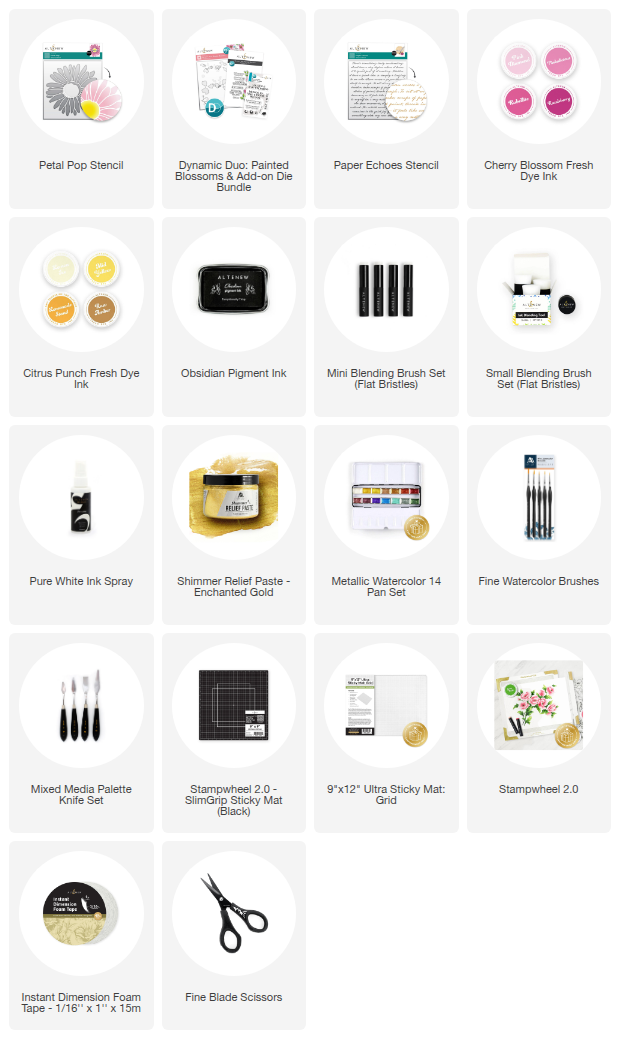
For this project I used the Petal Pop stencil along with a variety of Fresh Dye Ink collections to build vibrant color in the petals and center of this floral card.

Creating the Layered Petals of Your Floral Card
I started by placing the Petal Pop stencil onto my 9x12 sticky mat to hold it securely in place. A sticky mat is incredibly helpful for stencil work because it keeps both the stencil and cardstock from shifting while blending.
I began ink blending with Pink Diamond, the lightest shade in the Cherry Blossom Fresh Dye Ink collection. Using a small blending brush, I applied a soft wash of color over each petal.
Helpful Tip: Starting with the lightest ink first allows you to gradually build depth. Light layers create a smooth transition between colors and prevent harsh lines.

Building Dimension with Darker Shades
To deepen the color of your floral card, I switched to Rubellite, using a mini blending brush. Smaller brushes allow for more control when adding darker colors in tighter areas.
I blended about halfway out from the center, concentrating the color where shadows would naturally occur in the flower. Finally, I used Razzleberry, applying it closest to the center of the flower.
Why This Works: Layering progressively darker inks toward the center mimics how natural shadows fall on flower petals. This technique gives the petals a rounded, dimensional look instead of appearing flat.
Blending the Flower Center
Once the petals were complete, I removed the stencil and cleaned it before placing it back over the panel.
I used post-it notes to mask off the petals, which allowed me to focus on blending color into the center of the flower without accidentally darkening the petals.
For the center I used the Citrus Punch Fresh Dye Ink collection. I started with Mid Yellow, blending it directly in the center. Next, I added Lemonade Stand, blending inward from the edges of the center area. To create contrast and depth, I finished with Raw Amber.
Helpful Tip: Working light to dark in the center helps maintain brightness while still creating shadow and dimension.

Adding Mixed Media Splatter
Once the ink blending was complete, it was time to add some mixed media elements.
I splattered the background with:
This adds movement and visual interest to the background without overwhelming the main design.
Why Splatter Works: Splatter helps break up large areas of color and gives the background an artistic, organic feel. The gold splatter ties beautifully with the shimmer paste we’ll add next.
Adding Texture with Shimmer Paste
For the next layer of texture, I used the Paper Echoes stencil along with Enchanted Gold Shimmer Relief Paste.Instead of covering the entire stencil design with paste, I applied it in scattered areas across the panel.

Helpful Tip: Applying paste selectively keeps the texture subtle and prevents it from overpowering the floral design. It also creates a more organic mixed media look.
Assembling the Card
After everything was dry, I trimmed the panel down to 4" x 5 1/4" and attached it to an A2 card base using foam tape for added dimension.
For the sentiment, I used one from the Dynamic Duo Painted Blossoms bundle. I stamped the sentiment using my Stampwheel 2.0 with Obsidian ink and then cut it out with the coordinating die.
Using foam adhesive again, I popped the sentiment up in the center of the flower to complete the card.

Final Thoughts
This project is a great example of how layering different mediums—inks, splatter, and texture paste—can create a card full of depth and interest.
By building color gradually, adding subtle texture, and finishing with dimensional elements, the final card feels rich and detailed while still being easy to recreate. Mixed media techniques like these are a wonderful way to stretch your supplies and experiment with new creative possibilities.

SUPPLIES